Wozu Paläokritik? Spurensuchen zum Anthropozän
Presentation of Philipp Kohl: Ferne Enden. Tiefenzeit in Literatur und Wissenschaft vom Russischen Imperium bis zur Sowjetunion (Konstanz University Press 2025) [Distant Endings: Deep Time in Literature and Science from the Russian Empire to the Soviet Union]
The debate about the Anthropocene as an era of Earth’s history shaped by humans has brought increased attention to the concept of geological deep time in cultural studies. However,“deep time,” as described by historian of science Stephen Jay Gould, is only superficially related to the relatively new concept of the Anthropocene. “Deep time” refers to the idea, popular in the 19th century, of an immeasurably long prehistory of humankind. “Anthropocene,” on the other hand, refers to a very short period of time in geological terms—one that has only just begun.
In his book Ferne Enden: Tiefenzeit in Literatur und Wissenschaft vom Russischen Imperium bis zur Sowjetunion [Distant Endings: Deep Time in Literature and Science from the Russian Empire to the Soviet Union], Philipp Kohl asks what a literary history of deep time before the Anthropocene might look like. The book argues for paleocriticism as a means of poetically exploring the long periods of time that have been overlooked in both the Anthropocene discourse and the established paradigms of ecocriticism and ecology.
Philipp Kohl (Ludwig-Maximilians-Universität München) will discuss his book with Susanne Strätling (Freie Universität Berlin). The evening will be moderated by Liola Mattheis and Georg Toepfer (both ZfL).
Philipp Kohl is a research assistant at the Chair of Slavic Literature at Ludwig-Maximilians-Universität in Munich (since 2018). His research focuses on socialist popular science, the relationship between literature and science, and ecocriticism in Slavic cultures. His most recent book is Ferne Enden (Wallstein 2025).
Susanne Strätling is a Slavicist and literary scholar and has been Professor of General and Comparative Literature at the Freie Universität Berlin since 2020. Her work focuses on media theory of writing, the history of concepts, and transdisciplinary concepts of energy. Most recently, she co-edited the anthology Im Lichtozean (Matthes & Seitz 2025).
Liola Mattheis is a cultural scientist and doctoral candidate in the project Aitiologies in the Narratives of Reality in the Natural Sciences: On the Epistemic Function of Origin (Re)constructions at the ZfL. In her research she focuses on critical concepts of development and nature. In addition to academic texts, her writings have recently appeared in analyse & kritik and Texte zur Kunst.
Georg Toepfer is a biologist and philosopher. He is co-coordinator of the program area Knowledge of Life and research team leader of the projects Diversity. Concepts, Paradigms, History and Aitiologies in the Narratives of Reality in the Natural Sciences: On the Epistemic Function of Origin (Re)constructions at the ZfL. His work focuses on the philosophy of biology and the history and theory of basic biological concepts. He is co-editor of the volume Wissensgeschichte des Verhaltens (De Gruyter 2025).
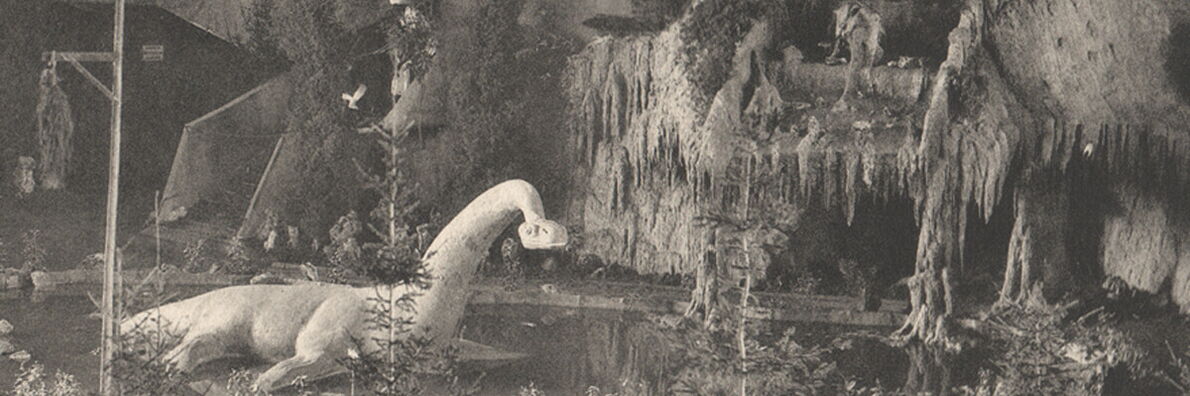
Fig. above: Photo of the anthropological exhibition in Moscow in 1879. Source: Komitet antropologičeskoj vystavki (ed.): Vidy antropologičeskoj vystavki v Moskve 1879 g. Moskva: Šerer, Nabgol’c i Ko. 1879, 22.