Coherence. The Poetics of Connectedness
The study of coherence as a specific literary phenomenon is, by its very nature, a history of literature, literary studies and media. In narratology, for instance, the concept of coherence has experienced a resurgence in recent decades that has largely gone unnoticed. Often used synonymously with “connection,” coherence appears to describe the unified content, structure, style and/or line of argumentation of a text in a seemingly neutral manner. However, at a deeper level, the understanding of coherence in narrative research has undergone a semantic shift that establishes it as an a priori of every narrative text. This shapes a specific, seemingly definitional conception of the “essence” of narrative literature. From the iconic distinction between story to Possible Worlds Theory, the notion that the narrative “world” ensures coherence has become a widely accepted principle in the field of narratological research.
This project, however, aimed to explore the historical continuities and discontinuities in strategies and modes of thought concerning coherence. In other words, it seeked to examine the questions raised about the contextual and world-historical coherence of a “story.” For instance, literary criticism and philosophy discuss the transition from early modern to “modern” narration as a shift toward causal motivation in the order of both the world and the novel, though the latter already operates beyond such an order. With the turn of the 20th century and the advent of the theory of relativity, the idea that a seamless causal connection exists between all things became untenable. Yet the idea of a necessary causal connection persists in the concept of the coherence of literary texts to this day.
Thus, we must link a reconstruction of the concept of coherence from the perspective of disciplinary history since the end of the 19th century with a historical examination of texts on poetic and rhetorical theory, historiography, and literature from the 18th century onward and ask: What are the historical implications of concepts of coherence? How is coherence conceived, established, problematized, or subverted?
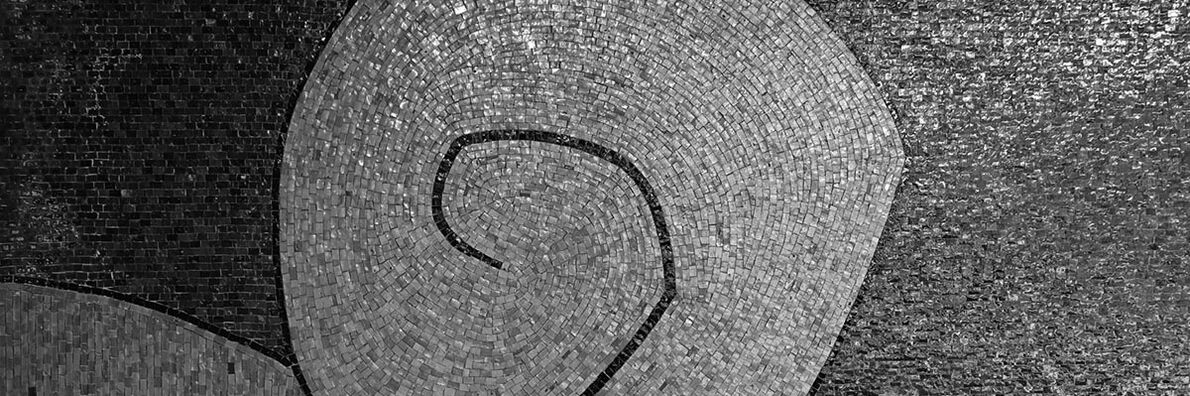
Fig. above: Bénédict Remund: “Times of Day” mosaic Night (1966) in the Gellertfeld retirement community, Karl-Jaspers-Allee 29, Basel (detail). Source: Wikimedia Commons